



Earlier this year, I delivered a masterclass related to character education at our educational conference at the British School Rio de Janeiro. I began that masterclass by posing a question that has increasingly shaped both my work in school and my doctoral research in Ethical Leadership:
What kinds of things, mostly within our sphere of influence, can quietly wreck our lives as adults?
It is a sobering question. Poor handling of conflict and emotion. Unhealthy relationships. Disrespectful and unkind behaviour. Dishonesty. Lack of self-awareness. Overspending and lack of discipline. Refusal to take responsibility. The habit of blaming and complaining. The inability to regulate anger. The failure to repair what we have damaged. The list goes on.
But there is one thing all of these adult problems have in common: they are all character problems.
That was one of the driving ideas behind the session. If we are serious about education, then we cannot think of behaviour merely as a matter of managing children effectively through rules, sanctions, and routines. Behaviour is tied to the deeper issue of character: the kind of person someone is becoming, the habits they are forming, and the values that guide them when nobody is watching. Can school help develop human beings with the character necessary to effectively tackle each one of those problems?
I believe schools have enormous potential to shape the character of young people. Sadly, one of the greatest barriers to developing character in students is too often the lack of reflection, self-awareness, and character in the adults themselves.
Schools are full of intelligent, committed, hard-working people. But intelligence and commitment do not automatically produce self-awareness. Adults who repeatedly blame others but rarely ask what they themselves contribute. Adults who confuse strong feeling with sound judgement. Adults who want children to be calm, respectful, and accountable, while modelling irritation, defensiveness, gossip, negativity, or avoidance themselves.
This matters because the moral culture of a school is never built by policy alone. It is shaped every day by the character of the adults within it. As I see it, the teachers’ character is the hidden curriculum of a school. In fact, anyone who works in a school is a role model. Years from now, our students are unlikely to remember much of the formal curriculum or the content of everyday lessons. What they will remember is who we were as people.
If adults do not reflect, schools become reactive rather than wise. A school can have all the right posters, all the right language, even all the right systems, and still undermine its own values because the adults within it are not doing the inner work that character requires.
I really feel this is one of the clearest links to my doctoral research in Ethical Leadership. A behaviour culture built only on control may produce order, but ethical leadership asks a more demanding question: what kind of people are we becoming while we try to lead and educate others?
Because reflection is one of the conditions of wise leadership, good teaching, and healthy relationships. Without it, adults repeat patterns they do not understand. They normalise behaviours they would challenge in children.
If we want children to develop character, then schools must be communities where adults are willing to do the same. That means asking uncomfortable questions. How do I behave under pressure? How do I speak about others when frustrated? Do I model responsibility, or merely demand it? Do I repair when I get things wrong? Do I sorry when I make a mistake? Do I create calm, or spread anxiety? Do I embody the values I want children to learn?
These questions go to the heart of education.
Because the real issue is not simply whether children comply in school. It is whether schools, through the example of the adults within them, are helping to form people of practical wisdom. As defined by the Jubilee Centre for Character and Virtues in the UK, practical wisdom is the capacity to choose the right course of action in difficult situations, or more simply, to do the right thing in the right way for the right reasons at the right time.
That is why behaviour cannot be reduced to control. It is a question of character. And character, in the deepest sense, is what shapes a good life.
Practical wisdom is what steers character. And character, in the deepest sense, is what shapes a good life. Aristotle understood this well. He saw character as central to human flourishing.
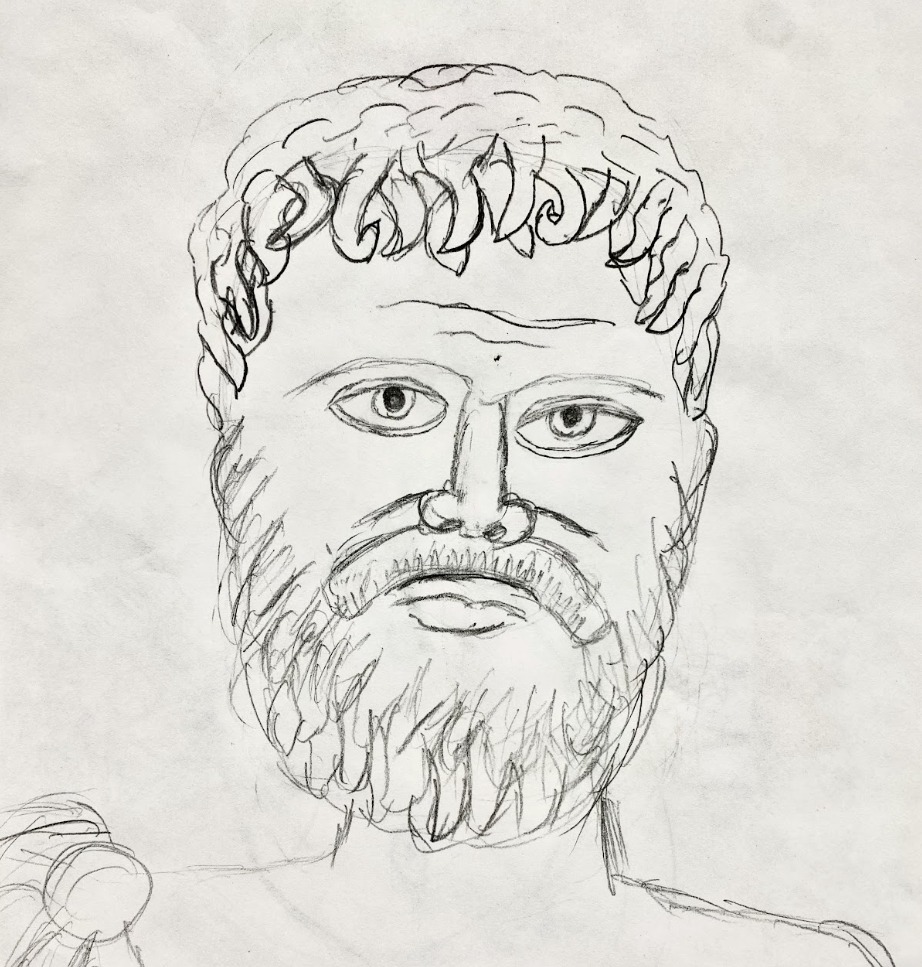
Compliance, of course, matters a lot. Young children especially need structure before they can exercise freedom wisely. But compliance is not the goal. It is a beginning, I believe, of virtue.
A compliant child may think, I am doing this because I do not want to get into trouble. Or, I am doing this because I want a reward. That may create short-term order, but it does not necessarily build moral depth. Character is different. Character says, I do this because it is right. Or even more powerfully, This is the kind of person I want to be.
A child may know the rule, but practical wisdom helps them understand how to apply it in the complexity of real life. It helps them pause before reacting. It helps them notice how others feel. It helps them tell the truth after making a mistake. It helps them repair harm rather than defend themselves. These are the foundations of adult life.
Psychology supports this too. We know that intrinsic motivation matters. Children are more likely to internalise values when they experience autonomy, competence, and relatedness. In simple terms, they need some sense of agency, some experience of success, and some feeling of belonging. If our behaviour systems lean too heavily on rewards and sanctions, we may win visible cooperation while weakening the deeper internal motivation we actually want to develop.
That is why character education has to seen as an important part of school culture. And culture is built, as I argued in the masterclass, through routines, relationships, and language.
Routines matter because they turn values into repeated action. A school that teaches children to greet others well, listen carefully, look after shared spaces, and repair small harms is doing more than maintaining order. It is shaping habits of respect and responsibility.
Relationships matter because children learn character in human connection. Correction lands differently when it comes from an adult who is calm, consistent, and clearly committed to the child’s good. Belonging is not a sentimental idea. It is one of the key conditions that allows moral growth to happen.
Language matters because words help children make sense of themselves. When we ask, “What happened?” “How did that affect someone else?” “What could you do now to put it right?” we are helping children move beyond impulse into reflection. By asking such questions, we are, I believe, developing conscience.
So, there are several practical implications for schools:
- Behaviour systems should always leave room for reflection. A consequence may show that something matters, but reflection helps a child understand why it matters and what needs to change.
- Schools should use guided questions more often. Simple questions such as “What mistake did you learn from today?” or “Who did you help today?” can turn ordinary moments into character education.
- Children need real opportunities to practise responsibility. They develop moral agency through meaningful roles such as peer mediation, helping younger pupils, serving others, and taking responsibility in the classroom.
- Schools should pay close attention to adult modelling. Children learn from how adults handle frustration, conflict, mistakes, and pressure, and they often remember who we were long after they forget what we taught.
- Schools need to work closely with parents. Character is formed not only in classrooms but also in everyday moments at home, such as helping with chores, speaking respectfully, saying thank you, and taking responsibility after mistakes.
- Gratitude and emotional tone matter more than we often realise. When adults model calm, perspective, and appreciation, and ask questions such as “What was the best part of your day?”, they help build a healthier and more reflective school culture.
All of this points to a bigger truth. The purpose of education must be to form decent human beings, not simply to produce academic success.
I find myself returning to this issue again and again in my doctoral work in Ethical Leadership. Put simply, the challenge for schools is to lead communities in ways that cultivate practical wisdom.
We all know adults who are academically capable yet unable to regulate emotion, handle disagreement with maturity, or admit fault. They may show politeness, but not kindness, and they may have achieved a great deal, but still lack integrity. That is why compliance, although necessary, is far too small an ambition.
What we need is something deeper: character rooted in practical wisdom. Exploring how schools cultivate that kind of character sits at the centre of my doctoral research in Ethical Leadership.
When things go wrong, as they always will, children need more than fear of punishment or hope of reward. They need inner resources. They need to know how to stay calm, tell the truth, repair what they can, and begin again. They need to become the kind of people who do the right thing not because somebody is watching, but because it aligns with who they are.
That is what schools should be helping to build.
The real question is what kind of educational culture are we creating?
Because in the end, education is about making children more human.