



Over the last few weeks, I have dealt with five serious incidents in school: four thefts and one act of vandalism.
The thefts involved World Cup football cards, the kind children collect, swap, compare, and talk about excitedly during break times. To an adult, a few cards may seem insignificant. But to children, these things matter a great deal. They can carry great sentimental value, even identity.
The vandalism was equally personal. A student had deliberately defaced another student’s name label above with a felt tip pen, the place where she hangs her bag outside the classroom. Again, on the surface, some might dismiss it as minor. But schools are built on culture, and culture is built through thousands of small actions. Small acts of disrespect matter because they shape how safe and valued people feel within a community.
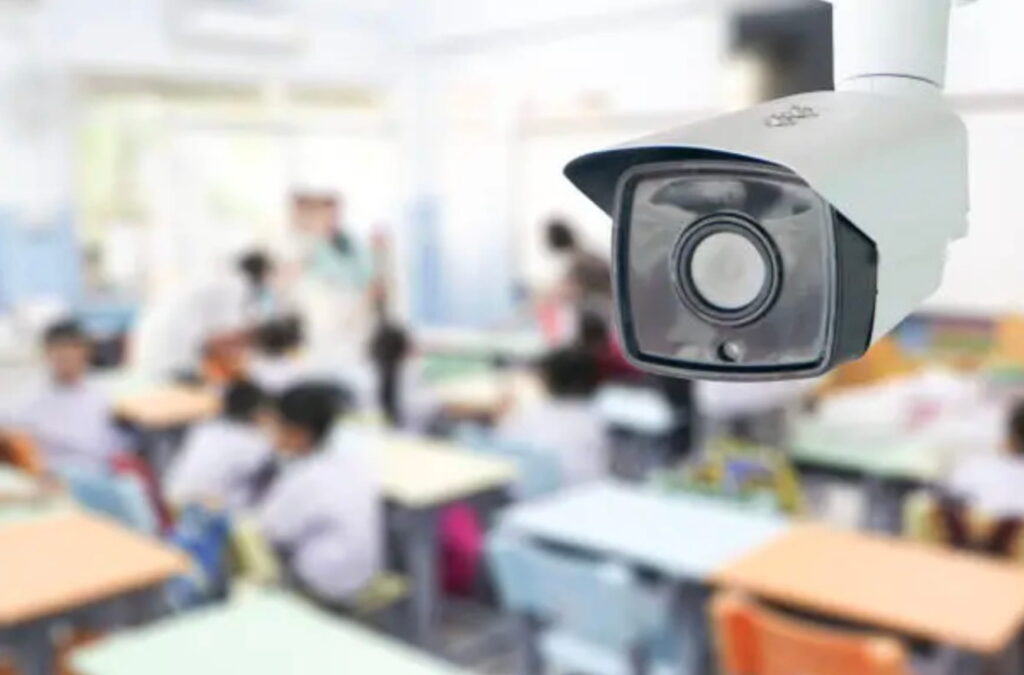
Thanks to our security cameras in corridors, we were able to identify the students responsible. In many schools, that might simply lead to a reprimand, and the matter would then be considered closed.
I have increasingly come to believe, however, that schools must aim for something deeper than compliance alone.
When I call students into my office to discuss incidents like this, I do not usually begin by telling them we have seen the footage. In fact, I prefer not to remind them that we have cameras practically everywhere. Unless it is absolutely necessary, I do not mention the cameras at all.
Instead, I invite them to tell me what they know about a particular situation.
Then I wait.
Often, there is a long pause. Students look down. They say very little. Sometimes they offer a partial version of events. Sometimes they try to distance themselves from what happened.
Then I ask, calmly and directly, “Can you now tell me the truth?”
And then I wait again.
That second pause is often the most important part of the conversation.
In my experience, most children tell the truth at that point, without me ever needing to mention the security footage. I prefer this approach because it gives the child space to think. It requires them, even if only for a few uncomfortable minutes, to confront what they have done before they know what I know.
I believe that matters.
Because there is a difference between admitting something because you have been caught and telling the truth because your conscience has been invited to speak.
Of course, boundaries matter. Consequences matter. Accountability matters. Children need structure. They need clarity. They need adults willing to hold the line.
But I also believe that the purpose of discipline is not simply to control behaviour. It is to help develop character.
What stayed with me most from these cases was not the footage itself. It was the conversations afterwards.
The cameras identified behaviour.
The conversations built character.
During the restorative conversations, we spoke about impact. Who had been affected? How had trust been damaged? What would restoration look like now? The apologies mattered, but more important was the reflection behind them.
Over the years, I have become more convinced that character is formed less through grand speeches and more through repeated moments of accountability. Aristotle understood this thousands of years ago when he argued that we become what we repeatedly do. Habits shape identity. Actions shape character.
Schools often talk about values, but values only become real when tested.
Honesty matters most when lying would be easier.
Respect matters most after disrespect.
Responsibility matters most after failure.
This is why I sometimes think difficult weeks in schools can become some of the most important educational moments we experience.
I also found myself reflecting on the role of truth. The security cameras allowed us to establish facts quickly and fairly. They prevented rumours, reduced false accusations, and removed ambiguity. In a strange way, the technology allowed us to focus on something deeply human: restoration.
Of course, technology alone cannot build character.
Technology can identify actions. Only relationships can change hearts.
As a school leader, I have become increasingly aware that young people do not need adults who simply punish them or rescue them. They need adults who can do something much harder: hold them accountable while still believing in who they can become.
That balance matters enormously.
If we only punish, children often become defensive or disconnected.
If we avoid accountability altogether, children fail to develop resilience, responsibility, and moral courage.
Real education sits in the tension between challenge and care.
I think this also connects to a broader philosophy of life that I have reflected on often in recent years. A meaningful life is not built by avoiding mistakes or discomfort. It is built through the willingness to repair what we may damage along the way.
In many ways, that is what character education really is.
Not producing perfect children. But helping young people gradually become the kind of people who can take responsibility without excuses, and choose growth over denial.
Sometimes the most important lessons in school are not found in classrooms at all.
Sometimes, as I have seen very clearly these past few weeks, they begin with a difficult conversation after a bad decision.
And sometimes those moments shape character far more deeply than we realise at the time.