



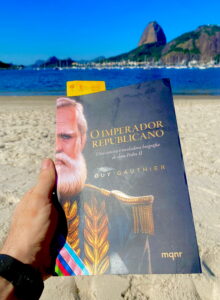
Over the holidays, I have been reading a biography of Dom Pedro II, the last Emperor of Brazil. The more I learned, the more I found myself drawn to the kind of person he appears to have been.
Pedro officially began ruling as Emperor in 1840, at just fourteen years old. From childhood, he received a very broad education in history, science, languages, literature, music, and the arts. But his education was not only about acquiring knowledge. It was designed to prepare him for the immense responsibilities of leadership.
Those raising him understood that intelligence alone does not make a good ruler. You also need discipline, judgment, restraint, and a strong sense of duty.
Pedro embraced learning as a true lifelong passion. He asked lots of deep questions, explored everything from astronomy and medicine to archaeology, photography, and languages, and remained intensely curious even as Emperor.
Character in the Use of Power
Knowledge, however, is not the same as wisdom. History is full of brilliant people who used their intelligence for selfish or destructive ends.
What makes Pedro II stand out is that his intellectual depth was matched by ethical seriousness. He held one of the most powerful positions in 19th-century Latin America, yet he was known for being personally modest and restrained. He valued constitutional government and saw public office as a responsibility, not a privilege.
He was not perfect. No one is. Nevertheless, when the monarchy was overthrown in 1889, he refused to encourage armed resistance and accepted exile rather than risk bloodshed in his name.
That decision says a great deal. Ethical character is most visible when someone has the power to act differently, yet chooses restraint.
Why Role Models Still Matter
Today, many people dismiss the idea of role models because everyone eventually proves flawed. But perhaps we are expecting too much from them. A role model does not need to be perfect. They simply need to demonstrate certain virtues with unusual clarity.
In Pedro II, I see intellectual curiosity, humility, self-discipline, devotion to learning, and a deep sense of public duty. These qualities are increasingly overlooked in a modern culture that often rewards confidence over competence, attention over service, and quick reactions over wise judgment.
We hear endless advice on how to become more successful, influential, or wealthy. We hear far less about how to become wiser.
Pedro’s life reminds me that a meaningful life is measured by the values with which we pursue our goals.
Capability Is Not Enough
Schools rightly focus on building knowledge, skills, and future readiness. Young people need to be capable. But capability alone is not enough.
Knowledge tells us what we can do. Ethics tells us what we should do.
That is why character education cannot be optional. Giving children powerful tools without helping them develop key values such as integrity, compassion, responsibility, and good judgment is dangerous.
The Question Behind Every Other Question
We constantly search for better systems, policies, technologies, and leadership models. All of these matter.
But every system is ultimately run by people. Unethical individuals can corrupt even the best systems. Ethical people, on the other hand, can bring wisdom and humanity even to imperfect ones.
Reading about Dom Pedro II reminded me why history still matters. It allows us to study lives in full, not to find flawless heroes, but to identify qualities worth emulating.
When I look at Pedro II, I do not primarily admire the crown he wore or the length of his reign.
I admire his curiosity, restraint, seriousness of purpose and commitment to something greater than himself.
The world will continue to need knowledgeable people. It will continue to need capable leaders, creative thinkers and skilled professionals.
But perhaps the most important question is not how we make people more capable.
It is how we help them become the kind of people who will use their capabilities well.
Ethics is the answer.